

 Find Your Store
Luxurious, dense, and richly coloured, bubinga is an exotic hardwood prized for its strength, natural lustre, and striking grain patterns. We offer select bubinga lumber and turning blanks ideal for fine furniture, high-end cabinetry, musical instruments, and specialty woodworking projects that demand both beauty and performance. Native to Africa, bubinga features deep reddish-brown tones with purple hues and dramatic figuring, often including flamed or waterfall grain patterns. It machines well, finishes to a high polish, and offers excellent dimensional stability—making it a top choice for woodworkers seeking a combination of visual impact and durability. As a proudly Canadian company, Windsor Plywood is your trusted source for rare and hard-to-find wood species. With expert advice and personalized service, we’ll help you find the perfect piece of bubinga to make your next project as bold and refined as the wood itself.


Frequently Asked Questions
What live edge wood products does Windsor Plywood carry?
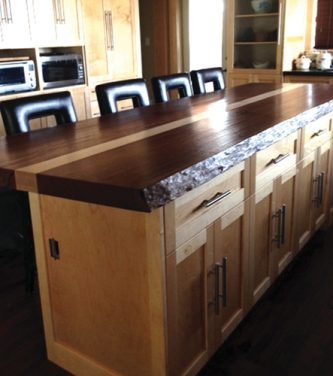
Windsor Plywood carries live edge slabs in select domestic and exotic species for table tops, countertops, and accent furniture. Species availability varies by current inventory and includes walnut, maple, cherry, elm, and others depending on what has been sourced. Slab dimensions including width, length, and thickness vary significantly by piece and available stock.
What is live edge wood and what makes it distinctive?
Live edge wood refers to slabs cut from logs where the natural, irregular outer edge of the tree is preserved rather than ripped straight. The live edge includes the bark line and the irregular shape of the tree's outer growth layers, producing a distinctive, unique outline that is the primary design feature. Each slab is a one-of-a-kind piece defined by the specific growth pattern of the individual tree.
How do I choose a live edge slab for a dining table?
For a dining table, consider the overall length and width needed for your intended number of seats. Allow 24 inches of width per person seating side by side and 30 inches from centre to centre for place settings. Consider the degree of natural edge irregularity and whether matching the two edges of a single slab (bookmatching) or a single slab presentation suits the design intent. View slabs in person at Windsor Plywood to assess figure, colour, and live edge character.
What finish should I apply to a live edge dining table?
For dining table tops, a hard-curing penetrating oil and wax finish such as Rubio Monocoat or Osmo Polyx-Oil provides a natural look that can be spot-repaired and is easy to maintain. For maximum surface protection and a wet-look appearance, catalyzed varnish or polyurethane provides a more protective film finish. Epoxy pours are used to fill voids and cracks in live edge slabs before finishing when a level surface is required.
Does Windsor Plywood help with live edge slab selection for specific projects?
Yes. Windsor Plywood staff can assist with slab selection for specific project dimensions and applications. Bringing the finished dimensions of your project, including table height and desired seating configuration, helps staff identify which current slabs best suit your requirements. Contact your local Windsor Plywood branch to inquire about current live edge slab inventory before visiting.